Organic garden design
Organic garden design
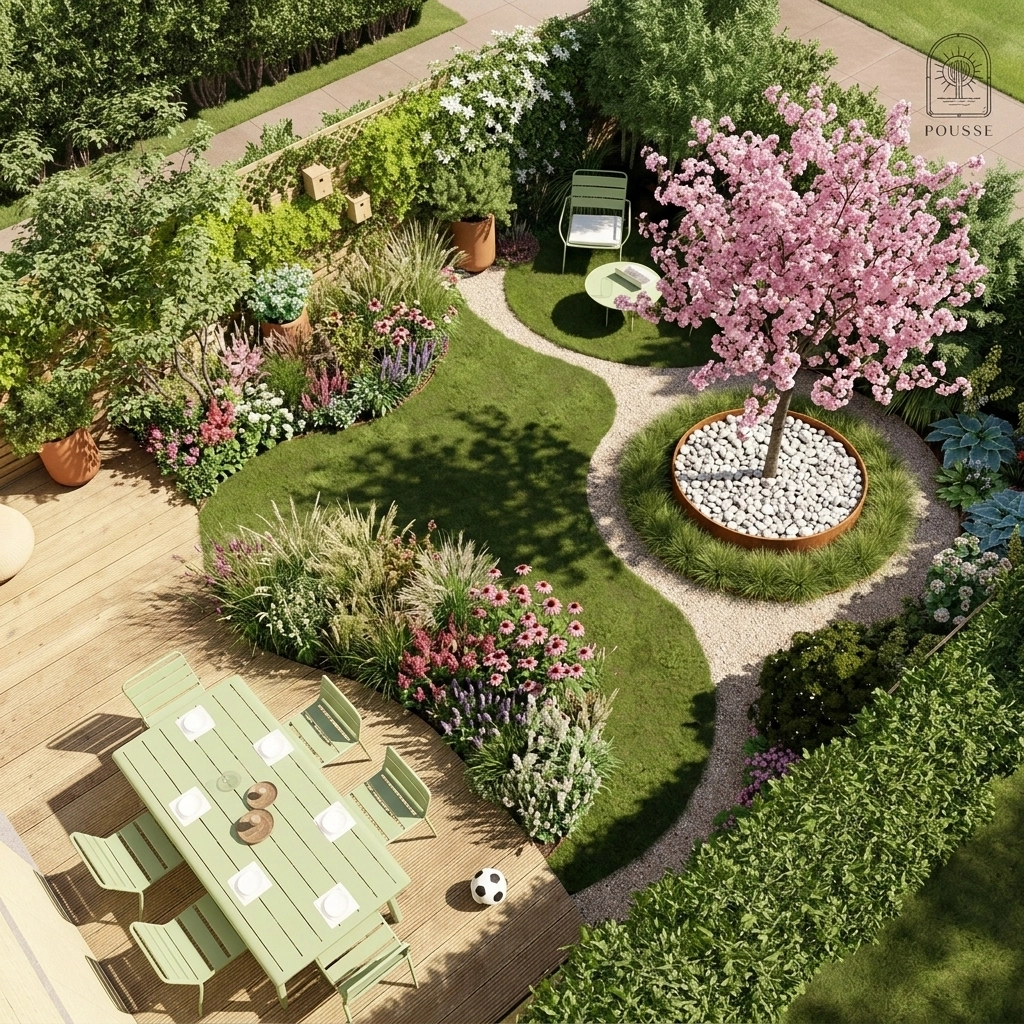
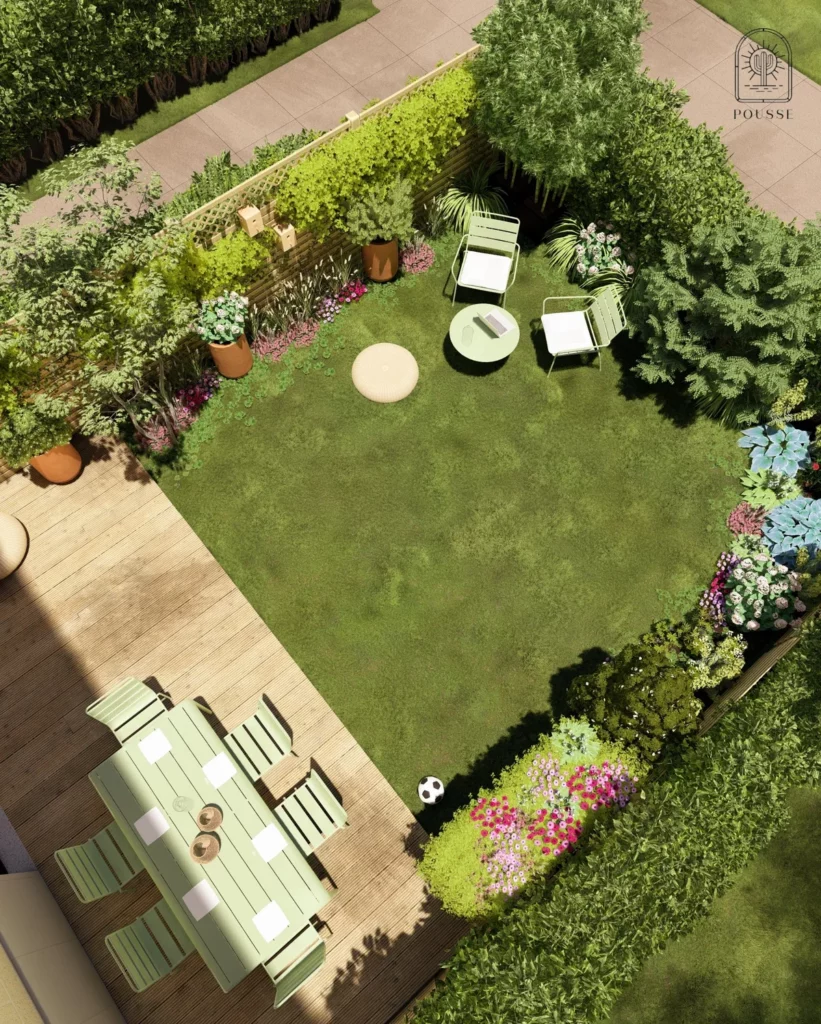
Two worlds, one view – see the difference.
Linear
or
organic?
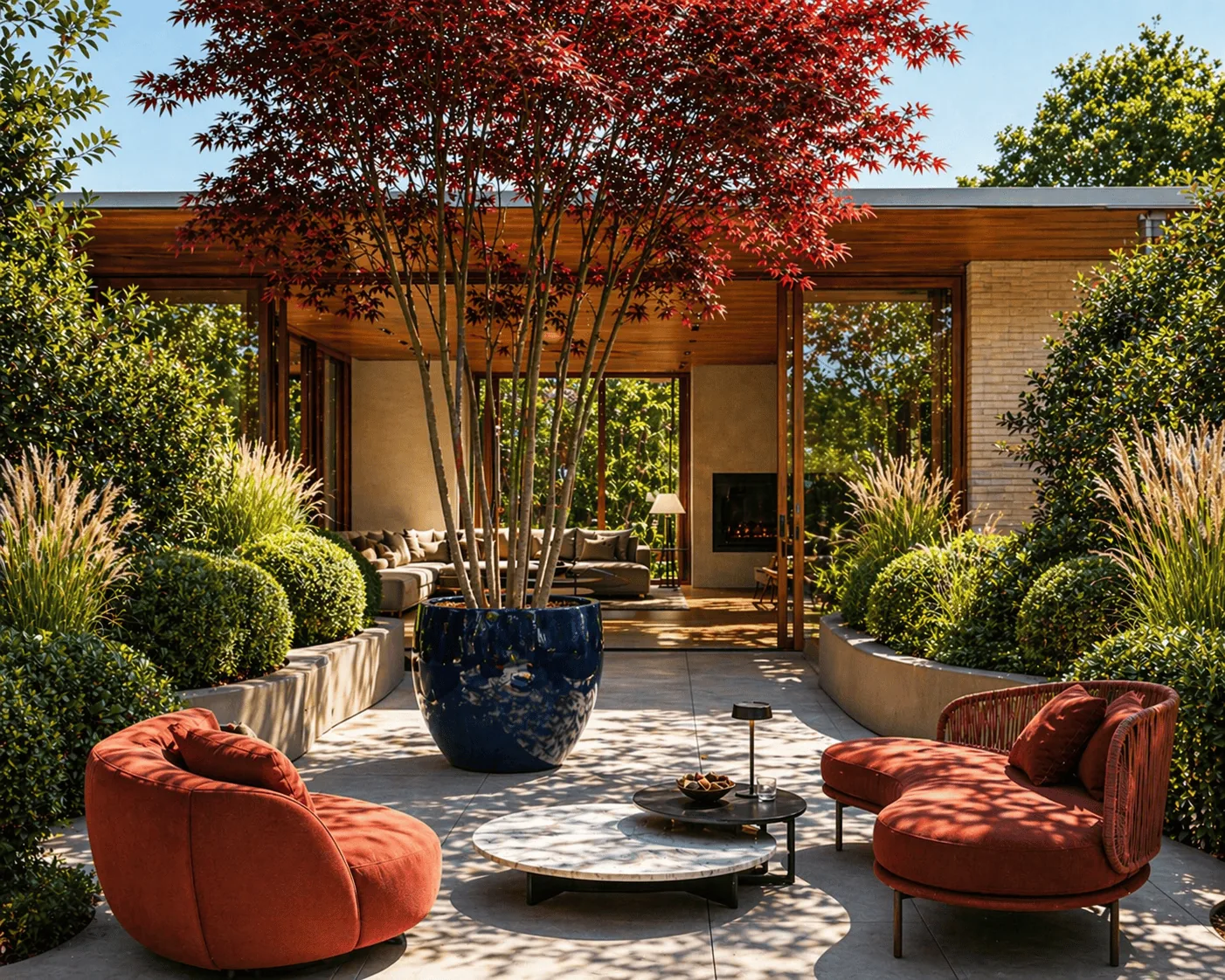
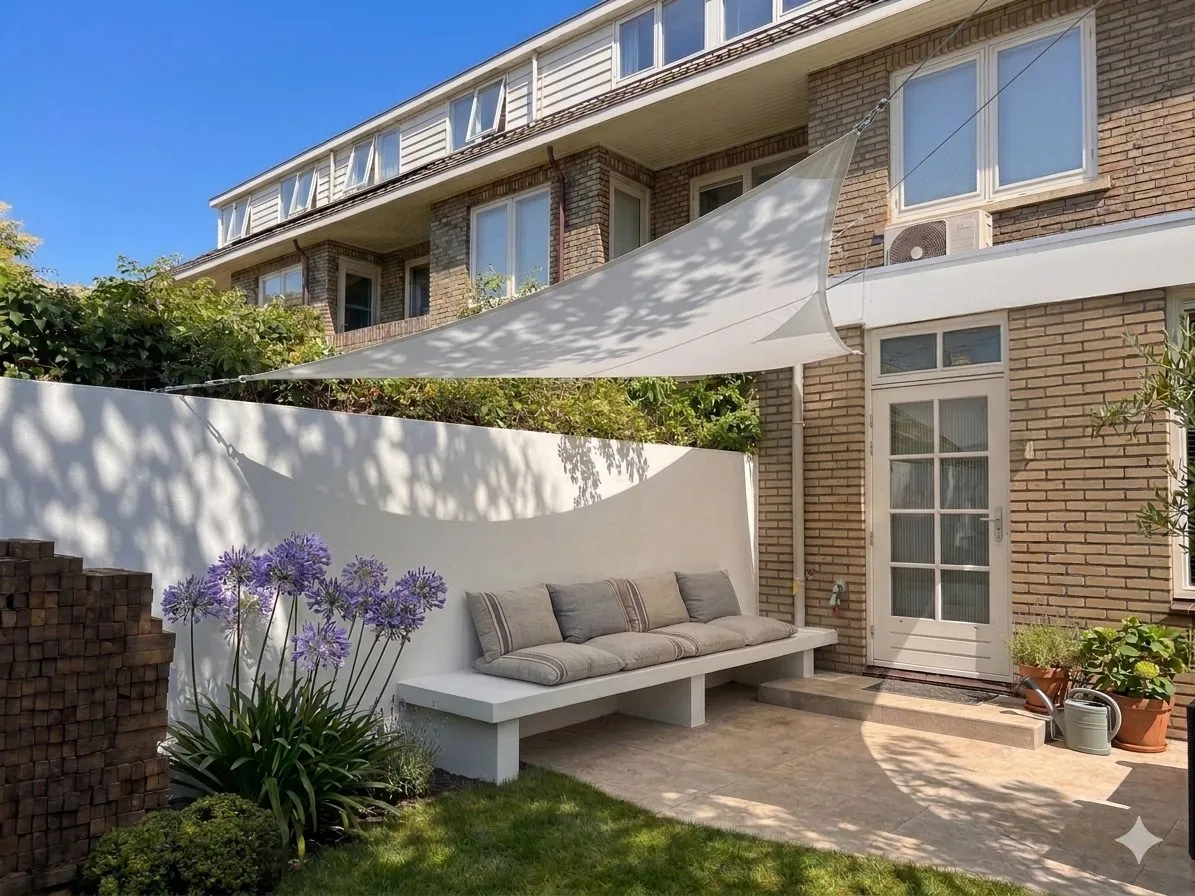
The traditional, linear garden is orderly and crisp: hedges in rows, borders in straight lines, paths like geometric cuts.
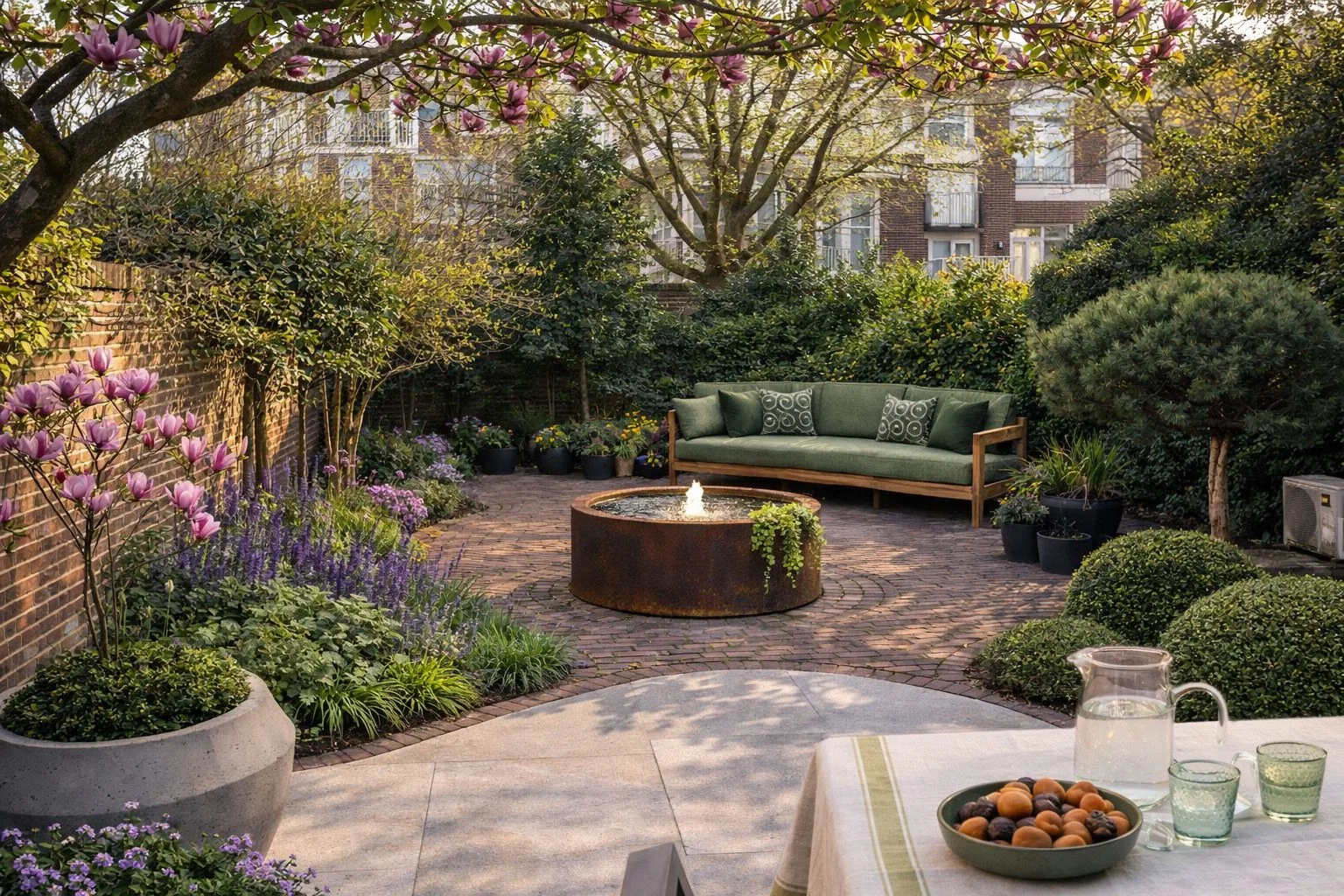
The organic garden follows a different rhythm. Here the lines flow, shapes grow out of nature, and depth comes from undulation and contrast.
In this series you always see two images side by side: linear vs. organic. Let yourself be surprised by the softness, layering and sense of space of organic garden design.
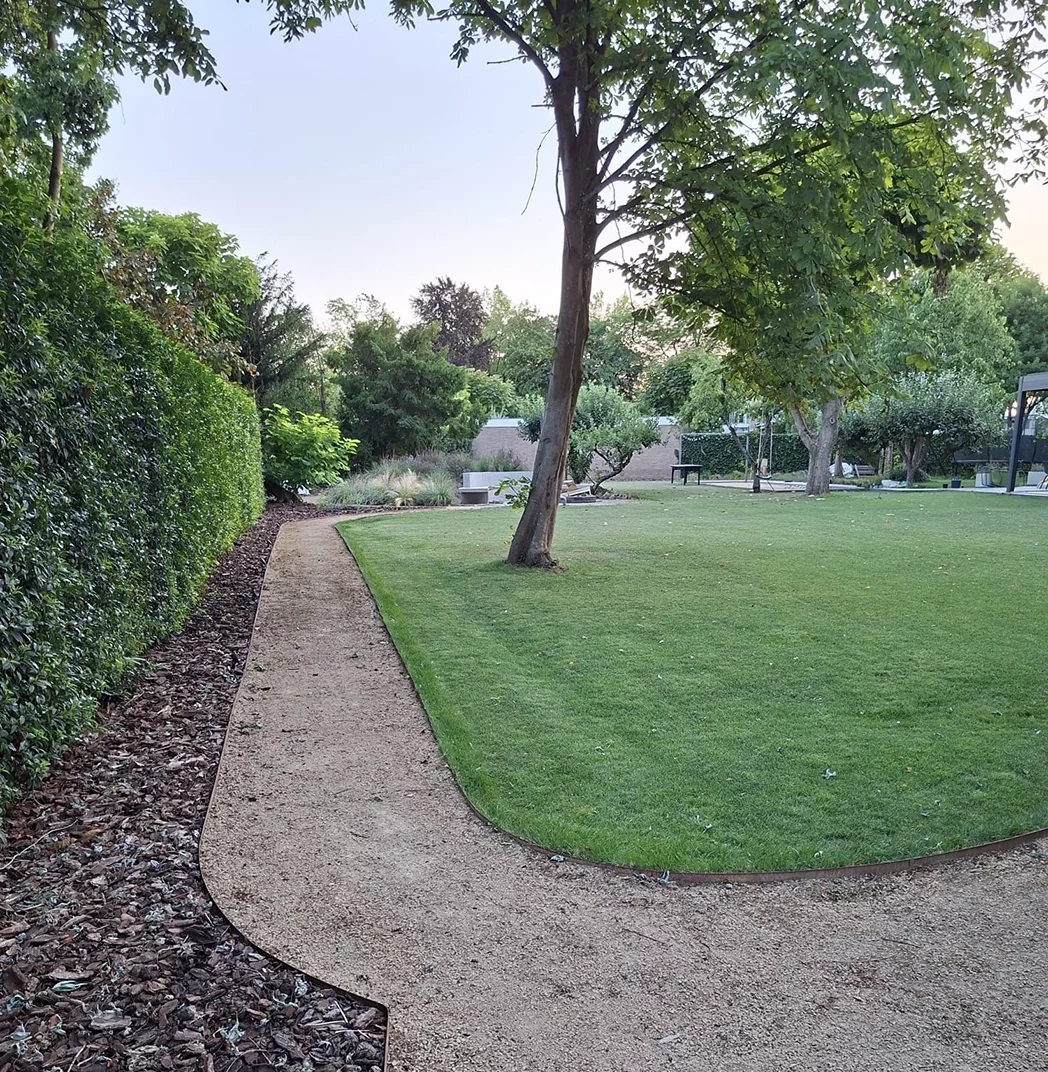
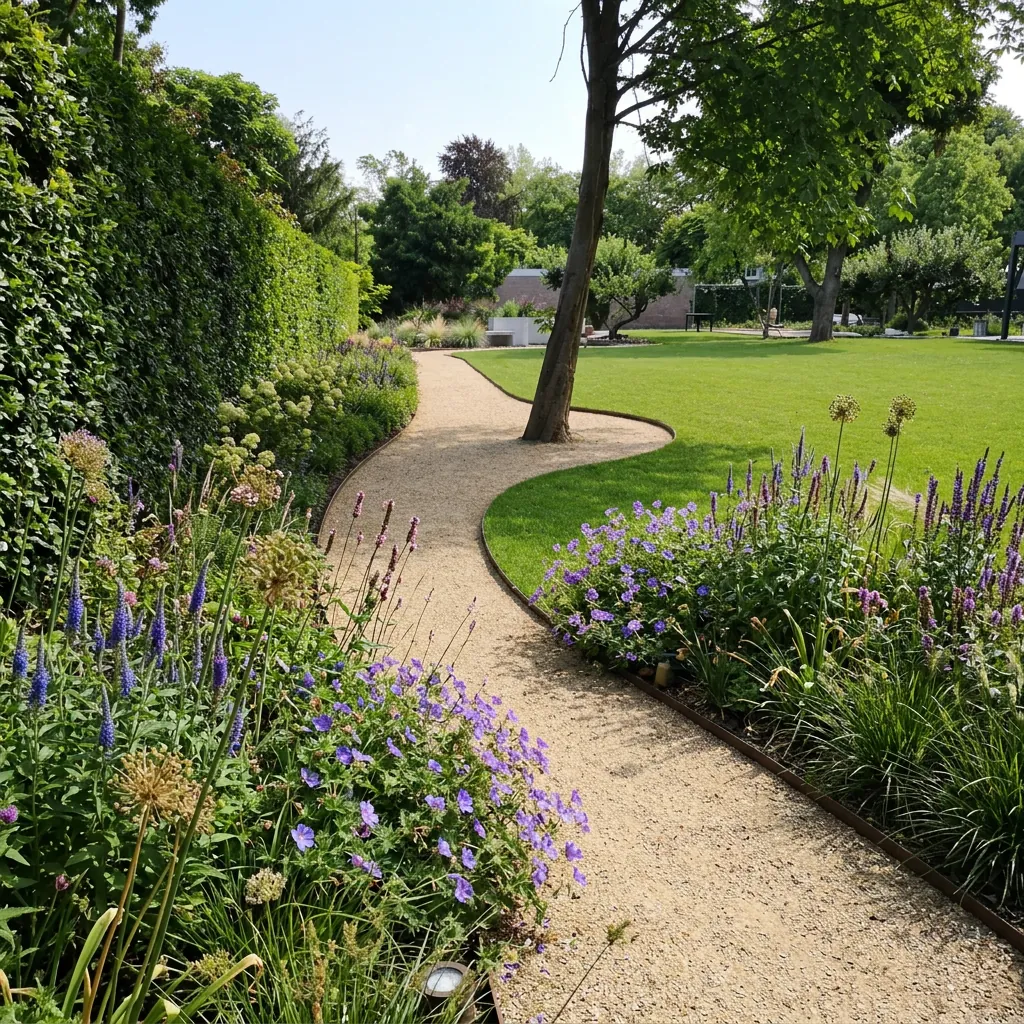
A new word. A new way of seeing.
Organifying.
So what is it?
Organifying is transforming a garden – or a way of thinking –
from rigid and controlled to flowing, natural and full of life.
It is the art of letting go: not rigid lines, but intuitive shapes.
Not repetition for its own sake, but rhythm taken from nature.
Organifying means:
• giving nature room
• celebrating the irregular
• balancing movement and calm
The result?
Gardens that breathe. Gardens that do something for you.
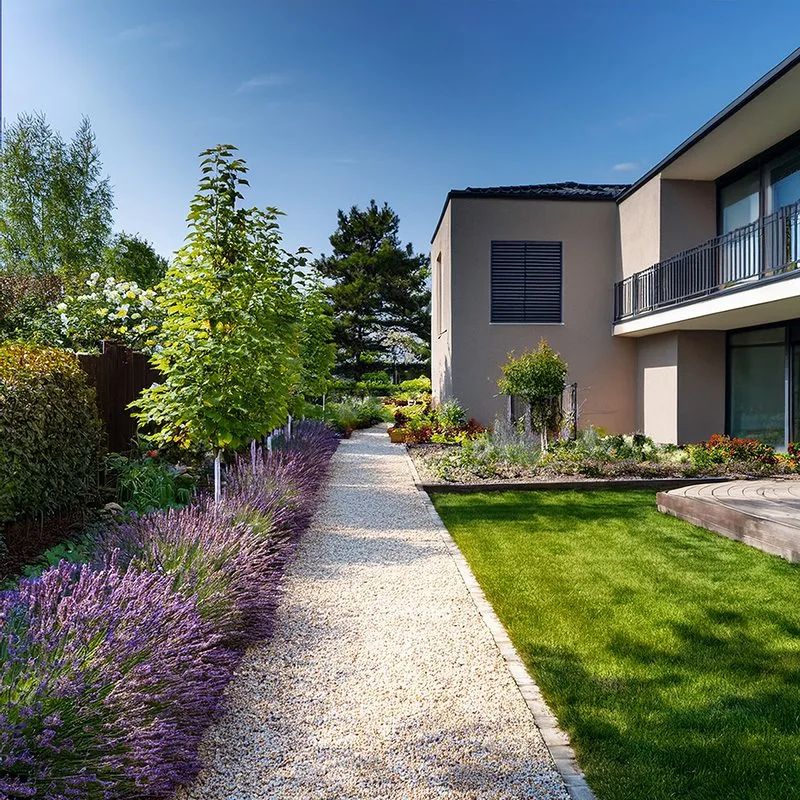
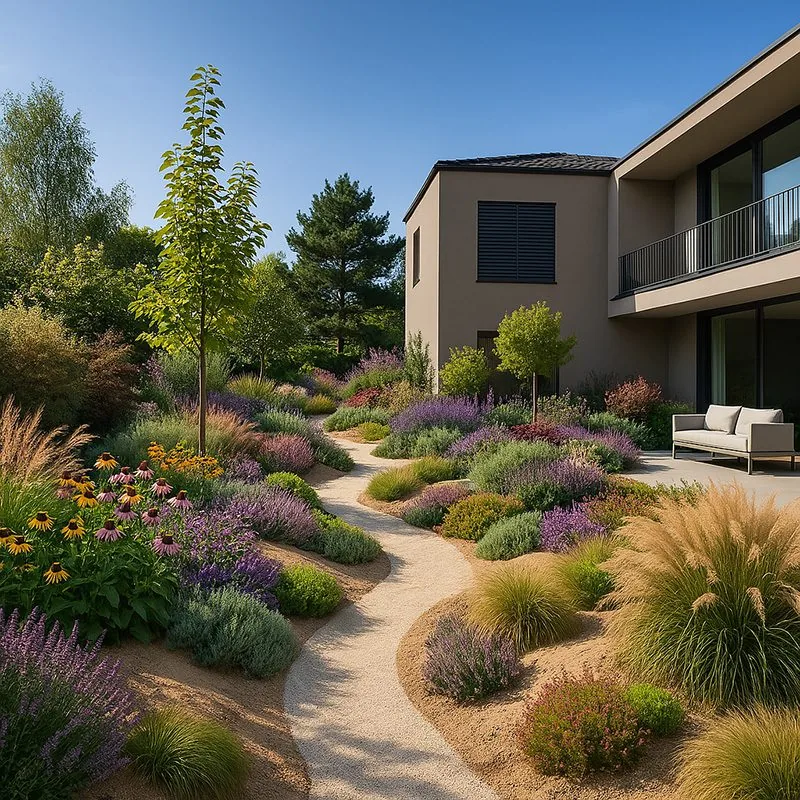
A living system that strengthens itself.
What does it bring? A natural synergy
In an organically designed garden, plants start to work together. Not each on its own little island, but connected. Plants give each other shade or support. One attracts butterflies, another offers nectar. Ground cover holds moisture for deep-rooted neighbours. This synergy attracts life: butterflies, bees, birds and countless insects find their place. And the more species, the stronger the system. This is biodiversity in action.
Not chance, but deliberate design.
A garden becomes an ecosystem – resilient, rich and full of movement.

The secret of a border
Border design offers endless possibilities. In shape, height, colour and planting. arianii designs the right border for the most striking effect in your garden.
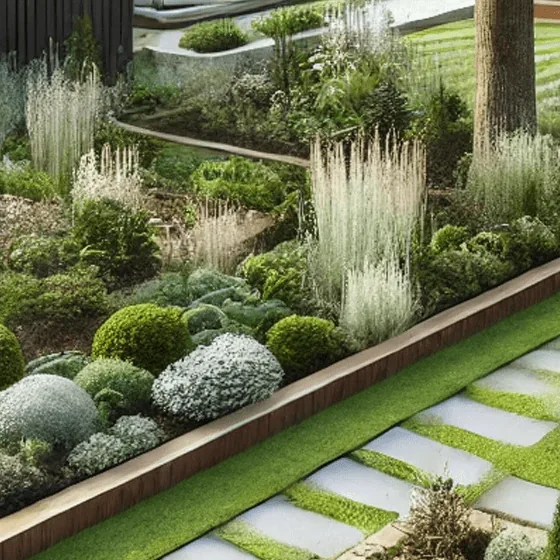
linear border
The classic, crisp border. Straight lines, clear frames and often repeating planting patterns that bring calm and symmetry.
- Order and structure: instantly gives the garden a tidy, architectural and modern feel.
- Easy to mow/maintain:Paths and lawns meet cleanly, which makes weekly garden maintenance (such as edging the lawn) simple.
- Challenge:
- Imperfections show: Because everything is so crisp, every dead plant, overhanging branch or tuft of weeds stands out immediately.
- Less natural: it forces nature into a straitjacket, which can come at the expense of the natural dynamics and biodiversity thatThe Garden arianiistands for.
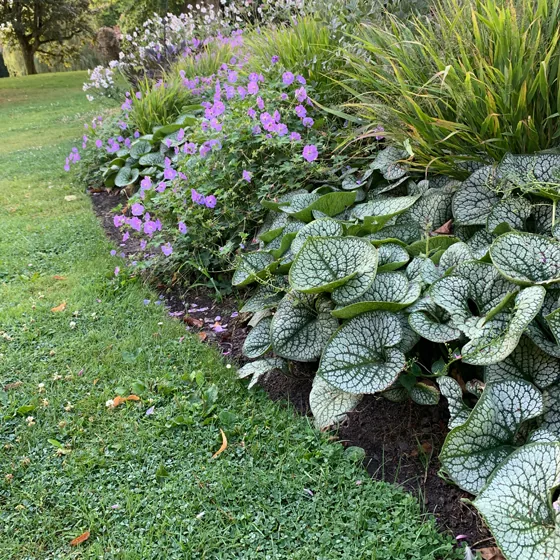
organic border
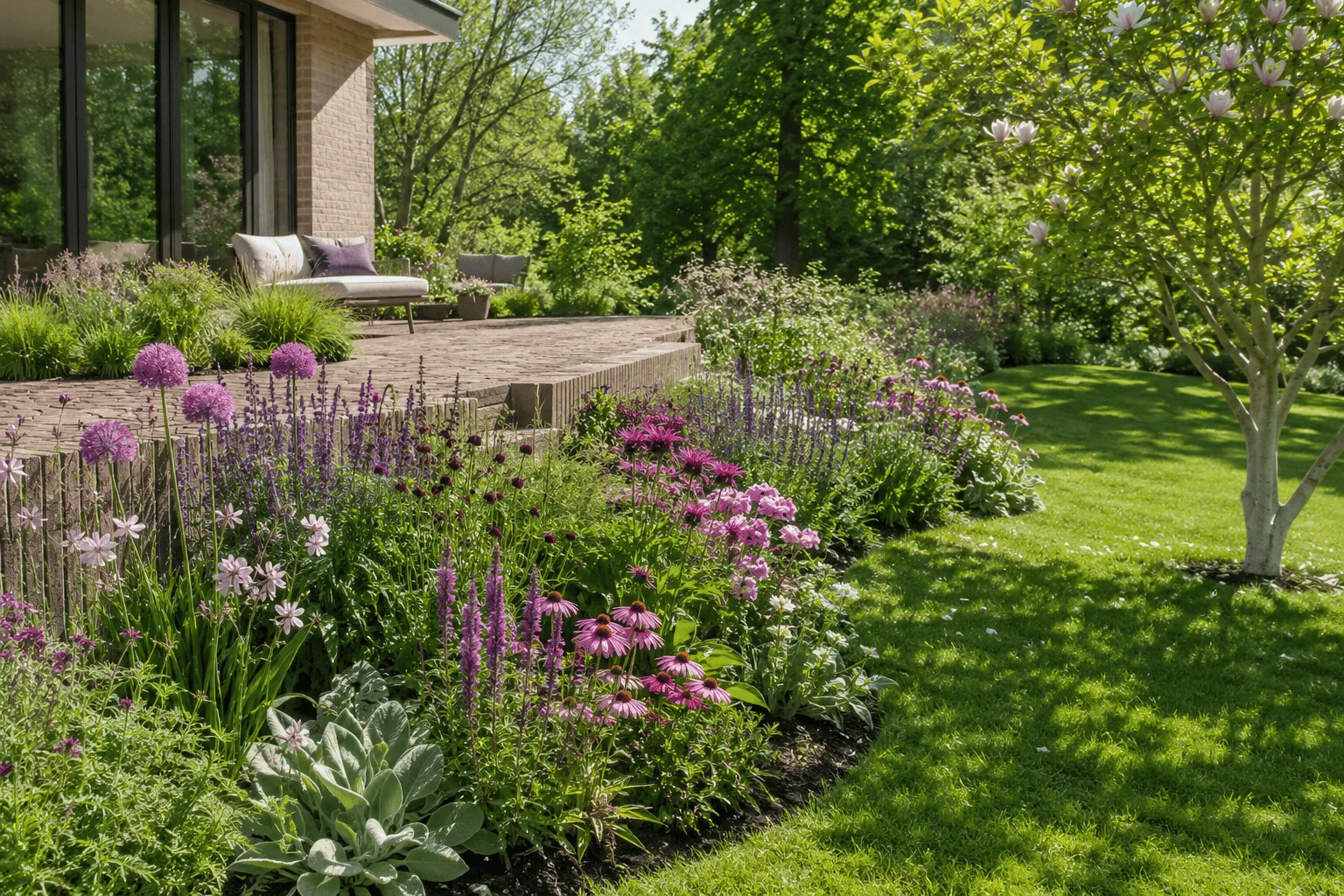
Flowing, undulating lines that follow the natural movement of the landscape. Plants weave through one another instead of standing in rigid blocks.
- Maximum calm: the soft, undulating lines break up hard fences and walls, creating an instantly relaxed feel.
- High biodiversity: because plants grow together in natural groups, they attract many different bees, butterflies and birds.
- Weeds are less noticeable: the dense, layered planting lets little light reach the soil, so weeds get less of a chance.
- Challenge:
- Requires plant knowledge: it needs a well-considered planting plan so that larger plants do not smother the smaller ones.
- Looser look: for lovers of an ultra-crisp, minimalist garden, this type of border can quickly look ‘too wild’.
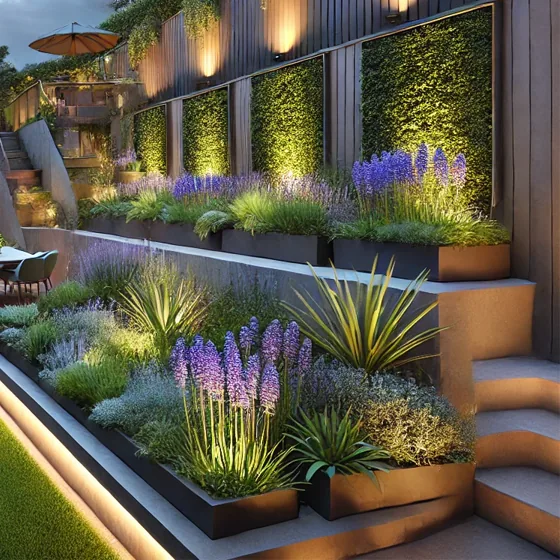
tiered border
A border that works with clear differences in height, built up from low ground cover at the front to medium-height plants and structural shrubs or ornamental grasses at the back.
- Visual depth:Even in a smaller city garden, this creates the illusion of a much deeper, larger space.
- Perfect view:Every plant literally gets its own stage; low-growing gems are not overshadowed by taller plants.
- Structure:Gives the garden a clear, architectural line all year round.
- Challenge:
- Rigid build-up: if a plant in the front row grows much taller than planned, it immediately upsets the whole balance.
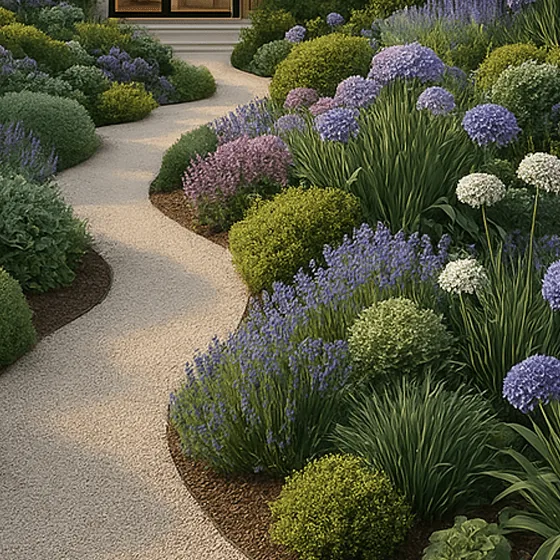
dune border
Inspired by the Dutch coastal landscape. Think changes in level, hardy grasses, drought-tolerant perennials and an open, airy structure.
- Changes in level: give a garden dynamism and create glimpses through. Low maintenance too: the selected plants (such as marram grass, sea buckthorn and sea holly) are used to harsh conditions and need hardly any extra water or feeding.
- Climate-resilient:Perfectly suited to ever warmer and drier summers.
- Unique dynamics:Even in autumn and winter this border keeps a beautiful silhouette thanks to the swaying grasses.
- Challenge:
- Specific soil requirements:Thrives best on poor, free-draining (sandy) soil; on heavy clay, substantial soil improvement is needed.
- Fewer bright colours: the emphasis is on texture, shades of green, sandy tones and subtle pastels rather than a riot of flowers.
Completed gardens
From organic design to organic garden